
Give every product a different job
A useful private-label range starts with a list of cleaning tasks, not three versions of the same label. Write one sentence for each proposed product: who would choose it, for which task, and why another product in the range would not do the same job. If the answers overlap, consider launching fewer products.
Separate the cleaning task from the price position. A specialist product is not automatically the premium tier of a general cleaner. A larger bottle is a pack-size choice, not evidence of greater cleaning power. Decide those questions separately before designing a matching family of packs.
Work through a hypothetical three-product range
The following is a planning exercise, not a Qiaoshou specification, recommended chemical combination or market forecast. All sizes and roles are hypothetical; actual formulas, packaging and directions need their own review.
Laundry detergent: a 1 L bottle for households buying routine laundry care, positioned as the range's core offer. Define the intended washing method, dosing information and relevant fabrics from the actual product instructions. Any stain-removal claim needs evidence for the specified conditions; bottle volume alone cannot establish a wash count.
Kitchen degreaser: a 500 mL trigger bottle for a shopper with a specific kitchen-cleaning task, positioned as a targeted addition. Identify the surfaces actually permitted by its instructions. Assess the proposed spray pack and label together. A claim about grease removal needs a defined soil, surface and evaluation method, not just a picture of a clean hob.
Drain cleaner: a 250 g pack for an occasional, specific drain-care task, with its own shelf position rather than a better/best relationship to laundry detergent. Confirm product form, permitted applications, packaging and warnings from its documentation. This example supplies no dosing, mixing or pipe-compatibility advice.
Separate a claim, a measurement and a design choice
Put proposed label statements in one column and their evidence in another. “Removes grease” is a performance claim. A recorded change in a defined soil under a documented test method is a measurement that may support appropriately limited wording. A yellow label or trigger bottle is a design choice. None can substitute for the others.
For each claim, record the exact wording, product version, test or other supporting document, conditions and reviewer. If the evidence covers one surface or one use condition, do not broaden the label to all surfaces or all conditions. Leave unsubstantiated wording off the approved artwork.
Compare packs on a consistent basis
Record net content, target selling price, units per carton and the space each pack needs. Compare price per litre or kilogram only between relevant, comparable products. A cost-per-use comparison needs supported dosing and comparable use conditions; it cannot be calculated from bottle size alone.
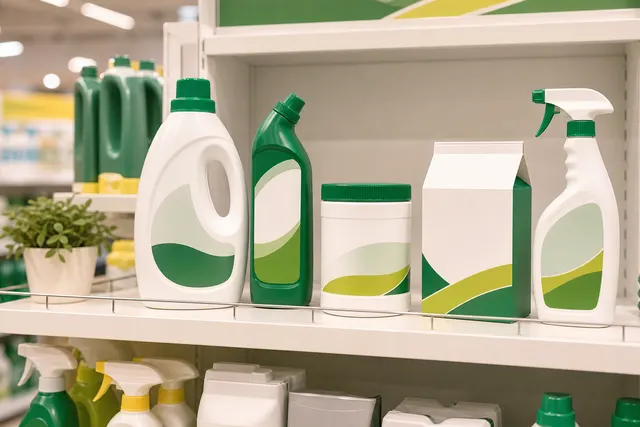
Then look at the range together. Keep the brand and information hierarchy consistent, but make product names, uses and necessary warnings easy to distinguish. Colour can help recognition, but the shopper should not have to decode colour to identify the product.
Finish with a one-page range decision
Create one row per product with its task, intended user, pack, price role, proposed claims, evidence gaps and owner of the next check. Mark each unresolved point as a question, not as a confirmed capability. Review the brief against actual samples and current product documents before approving a launch.
As a final exercise, cover the branding and compare the three descriptions. If two products still sound interchangeable, combine them or explain the difference more clearly. A smaller range with a clear purpose is a valid outcome of this planning process.